
If you want to make money online in 2026, you don’t need to gamble on dropshipping or day trading to build real income. After building a six-figure online business, testing countless business models, and helping coaches, experts, and everyday people monetize what they already know, one thing has become clear: not all income streams are created equal. This guide breaks down ten of the most effective ways How To Make Money Online For Beginners in 2026 using your existing knowledge, skills, and expertise. For each one, you’ll find what it is, its pros and cons, and who it’s actually a good fit for, so you can choose the path that matches your goals, skills, and lifestyle.
1. Digital Products
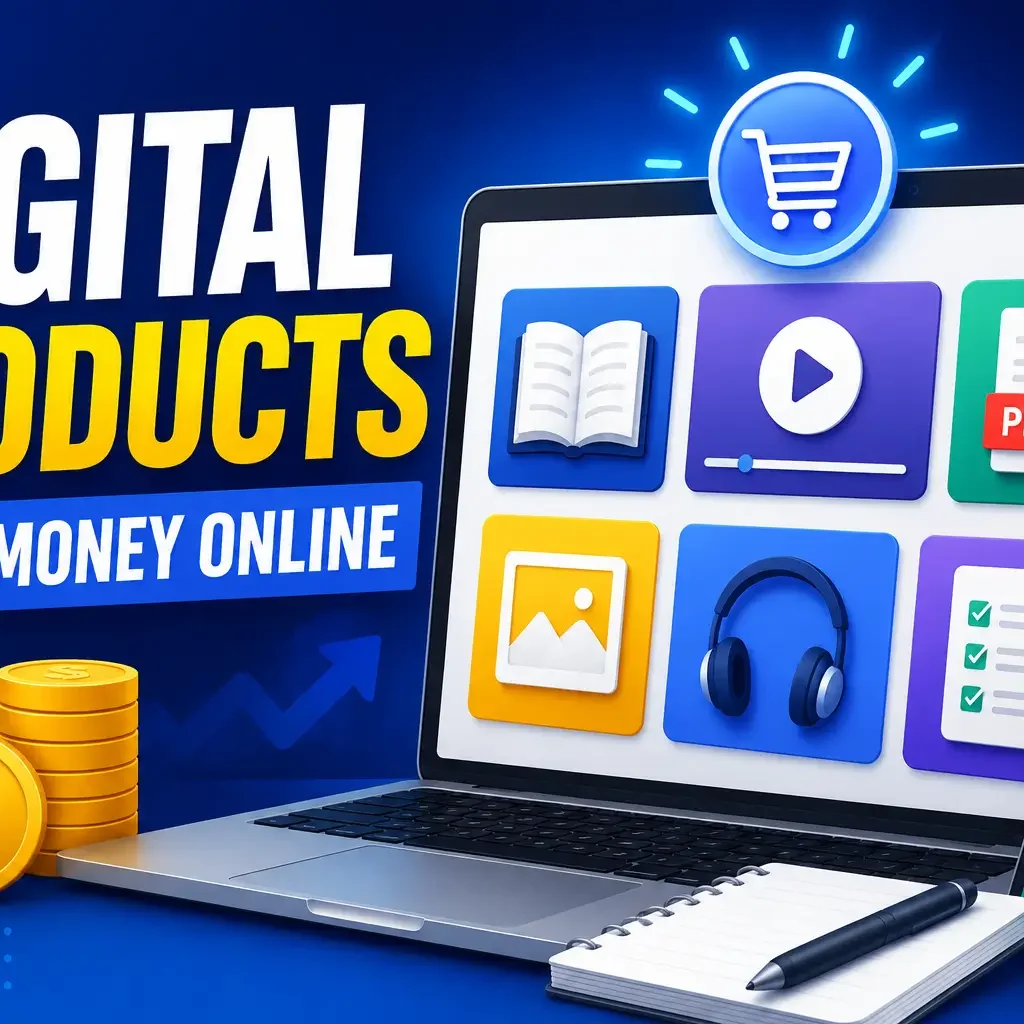
Digital products remain one of the smartest ways to make money online in 2026 because you build them once and can sell them again and again. A growing number of tools now make it easy to create digital products and just as many platforms exist to help you sell them on autopilot.
One standout tool for building and selling courses, ebooks, digital downloads, and membership sites is Kajabi, an all-in-one platform designed to help people monetize their skills, knowledge, and expertise through coaching or digital products.
The biggest shift in selling digital products in 2026 is that people no longer want vague, generic information. With instant AI answers now widely available, buyers expect a specific, guided outcome rather than a broad overview. If you want people to take action and move quickly from where they are now to where they want to be, your offer needs to be specific. Instead of promising something broad like “how to start a business,” a more compelling angle is “how to land your first $1,000 client in 30 days.” Specificity is what sells digital products today.
Best for: People who already have a documented process, framework, or skill they can package into a focused, outcome-driven product.
2. Affiliate Marketing
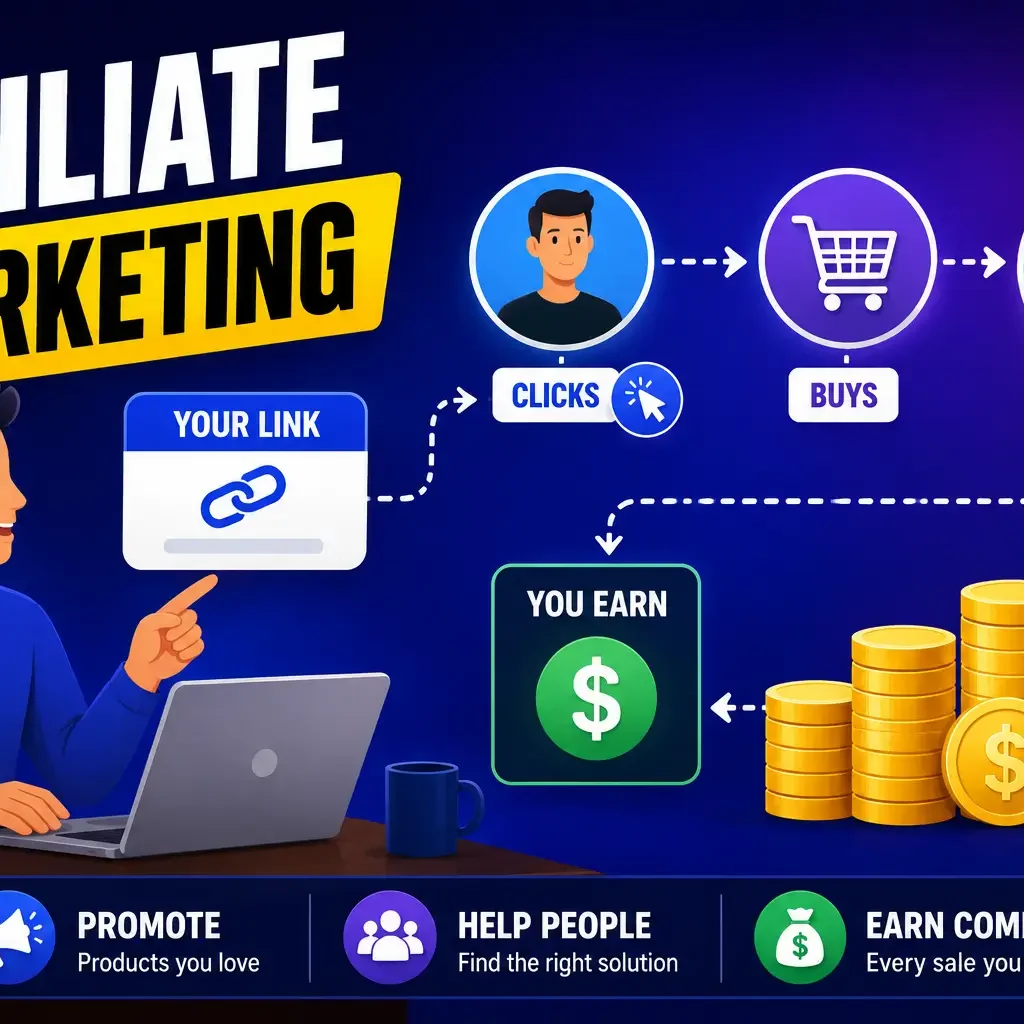
Affiliate marketing is when a brand gives you a unique link to share, and you earn a commission whenever someone purchases through that link. It still works well in 2026, but a lazy, unstrategic approach does not. Constant algorithm changes across search and social platforms mean affiliate marketers need a real content strategy behind their links.
The affiliates earning the most in 2026 are the ones who genuinely use and believe in the products they promote. That authenticity makes selling far easier and functions like paid word-of-mouth. You don’t need a massive audience to succeed with affiliate marketing — you need trust, which can be built through a blog, a podcast, or consistent content on social platforms.
Recurring affiliate programs, where you earn a percentage every month a customer stays subscribed, can be especially powerful. Passive income from affiliate commissions can add up to tens of thousands of dollars a year once you have a base of referred customers paying monthly, and older content can continue generating leads and sales long after it was first published.
Best for: People building an audience who want a low-effort, long-term passive income stream tied to products they already use and trust.
3. Online Coaching or Consulting
If you have a skill, experience, or transformation you’ve already gone through, you can sell that knowledge directly through coaching or consulting. This can span business coaching, travel consulting, social media strategy, fitness, wellness, spirituality, or relationship coaching. A useful way to find your niche is to think about three broad categories — health, wealth, and relationships — and narrow in from there.
Coaching and consulting is one of the fastest ways to make money online because you’re essentially selling your own expertise rather than building a complex system or funnel first. The hardest part isn’t the tech — it’s developing a skill valuable enough that people are willing to pay for it. Once you have that, coaching and consulting can be packaged and sold almost immediately, often for a higher ticket price ranging from thousands to hundreds of thousands of dollars depending on the value delivered.
This model is active rather than passive income, meaning you trade time for a higher return, but it also allows you to work fewer hours while charging more per client.
Best for: Experts who want to start earning quickly without building extensive systems or sales funnels first.
4. Content Creation With a Monetization Plan
Content on its own rarely pays well directly. To make money as a content creator, you need a long-term monetization strategy that drives your audience toward affiliate links, brand partnerships, your own products, or paid communities. Long-form content can also be repurposed into multiple shorter pieces across different platforms, extending its reach and value. Tools that automatically break long-form content into short clips can make this repurposing process much faster.
As your audience grows, more monetization opportunities open up, including advertising, affiliate partnerships, product sales, and brand deals. But content creation by itself is not a business model — it’s a distribution channel that needs a monetization strategy attached to it.
Best for: People who enjoy creating content regularly and are willing to build a distribution-to-offer pipeline over time.
5. Sponsorships and Brand Deals
Sponsorships and brand deals happen when companies pay you to promote their products or services to your audience, whether through written content, podcasts, newsletters, social posts, or live events. A common myth is that you need hundreds of thousands of followers before brands will work with you. In reality, a smaller, highly engaged audience that trusts you is often more valuable to a brand than a massive but disengaged one, because brands care about reaching the right people, not just the most people.
If you serve a specific niche and have built credibility, sponsorship opportunities can come far sooner than expected. The key is only promoting products that genuinely align with your audience and that you’d recommend regardless of payment, since trust takes years to build and only seconds to lose.
Best for: Niche creators with an engaged, trusting audience, even a relatively small one.
6. Newsletter Business
A newsletter — a consistent email list you send valuable content to — has become one of the most underrated ways to make money online in 2026. Some people monetize newsletters through sponsorships, others through affiliate recommendations, and many offer paid subscriptions or exclusive content for subscribers.
What makes a newsletter especially powerful is that you own the relationship with your audience directly. Social platform algorithms change constantly and without warning, but no one can take away your email list. As AI makes generic content easier to produce, trust and direct relationships become even more valuable. The most successful newsletter builders aren’t necessarily the ones with the biggest lists — they’re the ones who consistently deliver value and build strong relationships with readers.
To monetize a newsletter, you can charge a recurring subscription fee for access, or keep it free and sell products or services to your subscribers once they’ve joined.
Best for: Anyone already creating content who wants to own their audience relationship outside of social platforms.
7. Freelancing
Freelancing differs from coaching or consulting in that it’s centered on one specific, in-demand skill you perform on behalf of clients, rather than teaching a transformation. High-demand freelance skills include editing, production for audio and visual content, sales funnel building, and email marketing.
As online content creation has boomed, many creators either lack the time or the desire to learn skills like editing, opening the door for freelancers to offer that service directly. Businesses will always pay for services that save them time or make them money, which is why skill-based freelancing isn’t going away. These are skills that can typically be learned through practice or a dedicated course, making freelancing one of the more accessible entry points to make money online.
Best for: People who want to build a specific, learnable skill and start earning relatively quickly by serving other businesses or creators.
8. Memberships and Paid Communities
If people keep asking you the same questions repeatedly, that’s often a sign a membership or paid community could work well for you. These offer ongoing access, accountability, and support, and members are often willing to pay monthly for consistent value and connection.
Memberships work particularly well when paired with another product or service, since they give customers accountability and continued support after their initial purchase. Pairing a course with a community, for example, lets members learn and grow together rather than navigating a new skill alone. This is especially valuable for entrepreneurs, who often build their businesses without a built-in support network. A like-minded community adds ongoing value beyond the initial transformation a product or program delivers.
Best for: Businesses that already have a product or service and want to add recurring revenue plus stronger customer retention.
9. Print on Demand
Print on demand is a business model where you create custom designs for products like t-shirts, hoodies, mugs, and posters, and a third-party company only produces each item once an order is placed. This applies to physical goods like books as well as branded merchandise tied to a coaching or content business. You don’t need to buy inventory upfront, store products, or handle shipping — a print-on-demand partner manages production and fulfillment for you.
The biggest appeal is low risk and easy setup: you can upload designs, connect them to an online store, and generate sales without ever touching a physical product. However, the biggest challenge is that profit margins are typically thinner than expected due to heavy competition. Successful print-on-demand businesses usually have a clear niche and an audience that already knows, likes, and trusts the brand behind the designs.
Best for: Existing brands or audiences looking to add a low-risk, supplementary revenue stream — not usually a strong choice as a sole business model.
10. Licensing Your Intellectual Property
Most people assume the only way to make money from their knowledge is to sell it directly to customers through a course or coaching program. Licensing your intellectual property (IP) is an often-overlooked alternative, where you allow other individuals or organizations to use your content, systems, frameworks, certifications, templates, or training materials in exchange for a licensing fee.
Instead of selling your knowledge one customer at a time, you let others use it within their own businesses. This can look like licensing a curriculum to schools, allowing other coaches to teach your framework, building a certification program, or granting businesses permission to use your training materials with their employees — a strong fit for leadership consultants working with larger organizations.
Licensing isn’t usually the easiest model to start with, since it requires a proven process that reliably delivers results, something that can take years to develop. But once that system exists, licensing can create meaningful revenue without requiring you to personally deliver training every time.
Best for: Established experts and consultants with a proven, well-tested framework or curriculum.
Why Stacking Income Streams Creates Real Stability
Most people making serious money online aren’t relying on just one of these methods — they’re stacking two, three, or even four income streams together: content, affiliate links, digital products, courses, and coaching or services combined. This is what creates real stability and flexibility, allowing you to adjust your focus depending on your season of life. During lower-capacity periods, you can lean more on automated, passive income streams and less on active, on-demand coaching or consulting.
This kind of system means income can keep coming in even during time away from work, generated through a mix of product sales, affiliate payouts, and coaching calls booked in advance. The key is building a system where potential customers can discover you, join your email list, learn about your offers, and decide if they’re a fit — largely before you ever speak with them directly.
How to Get Started in 2026
If you’re starting from scratch, the recommended approach is to focus on one income-producing skill, use one solid platform, and create one clear offer. Simplicity is what sells. Trying to build a course, an affiliate program, and a coaching offer all at once tends to lead to overwhelm and weaker results across the board. Coaching or consulting is often the easiest starting point, since it requires the least setup. Once that’s working well, you can expand into additional income streams like a course or membership in the following year.
Conclusion
There’s no single “best” way to make money online in 2026 — the right model depends on your skills, the time you have available, and how quickly you want to see results. Digital products and licensing favor those with an established system, coaching and freelancing reward people who want to start earning quickly, and content, newsletters, and sponsorships build long-term, audience-driven income. The most sustainable path usually starts with mastering one model and gradually stacking additional income streams as your knowledge-based business grows.
Key Takeaways
- Digital products work best when they promise a specific, fast outcome rather than vague information.
- Affiliate marketing rewards authenticity and recurring commission programs over one-off promotions.
- Coaching and consulting is one of the fastest ways to generate active income without building complex systems.
- Content creation only pays when it’s paired with a clear monetization strategy.
- Sponsorships favor trust and niche relevance over sheer audience size.
- Newsletters let you own your audience relationship independent of social platform algorithms.
- Freelancing turns a single in-demand skill into fast, sellable income.
- Memberships and paid communities add recurring revenue and stronger retention to an existing offer.
- Print on demand works best as a supplementary income stream, not a standalone business.
- Licensing intellectual property allows experts to earn from a proven system without delivering it personally every time.
- Stacking multiple income streams creates more stability and flexibility than relying on one alone.
Frequently Asked Questions
What is the easiest way to make money online in 2026?
Coaching or consulting is often considered the easiest starting point because it requires selling your existing knowledge and expertise directly, without building complex funnels, digital products, or technical systems first.
How much can you realistically earn from affiliate marketing?
Earnings vary widely, but recurring affiliate programs — where you earn a percentage every month a referred customer stays subscribed — can generate a steady, growing passive income over time as your referred customer base builds up
Do you need a large audience to make money online?
No. A smaller, highly engaged audience that trusts you is often more valuable for sponsorships, affiliate marketing, and product sales than a large audience with little engagement or trust.
Is print on demand a good primary business model?
It can work as a business, but it typically performs best as a supplementary income stream added to an existing audience or brand, since profit margins are often thinner than expected due to strong competition.
How many income streams should you build at once?
It’s usually best to focus on one income-producing skill and one solid offer first. Once that’s working consistently, you can layer in additional income streams like a course, membership, or affiliate program.