
Since the launch of Google AI Overview, bloggers, publishers, and website owners around the world have experienced significant drops in organic traffic. Many websites have reported lower click-through rates and declining visibility inside Google Search. As a result, “Google AI Traffic Recovery” has quickly become one of the most discussed topics in the SEO industry. Google has now responded with several new updates aimed at helping publishers recover lost traffic and improve website visibility.
According to SEO experts, AI-powered search is still evolving rapidly. Because of this, Google is continuously adjusting its systems to improve user experience while also ensuring that publishers continue receiving traffic from search results.
Why Website Traffic Dropped After Google AI Overview
The introduction of Google AI Overview completely changed how users interact with search results.
Previously, users clicked on website links to read complete answers and detailed information. Now, Google often provides AI-generated summaries directly inside search results, reducing the need for users to visit external websites.
Because of this shift:
- Website clicks declined
- Blog traffic dropped
- News publishers lost visibility
- Small creators experienced revenue losses
This is the primary reason why Google AI Traffic Recovery has become such an important issue for publishers and SEO professionals.
Although Google insists that AI Overview is designed to improve user experience, many website owners believe it has reduced organic website traffic significantly.
read also: AI Website SEO Guide, 10 Powerful Steps to Rank Vibe Coded Websites Fast in Google
What Google Is Doing for Google AI Traffic Recovery
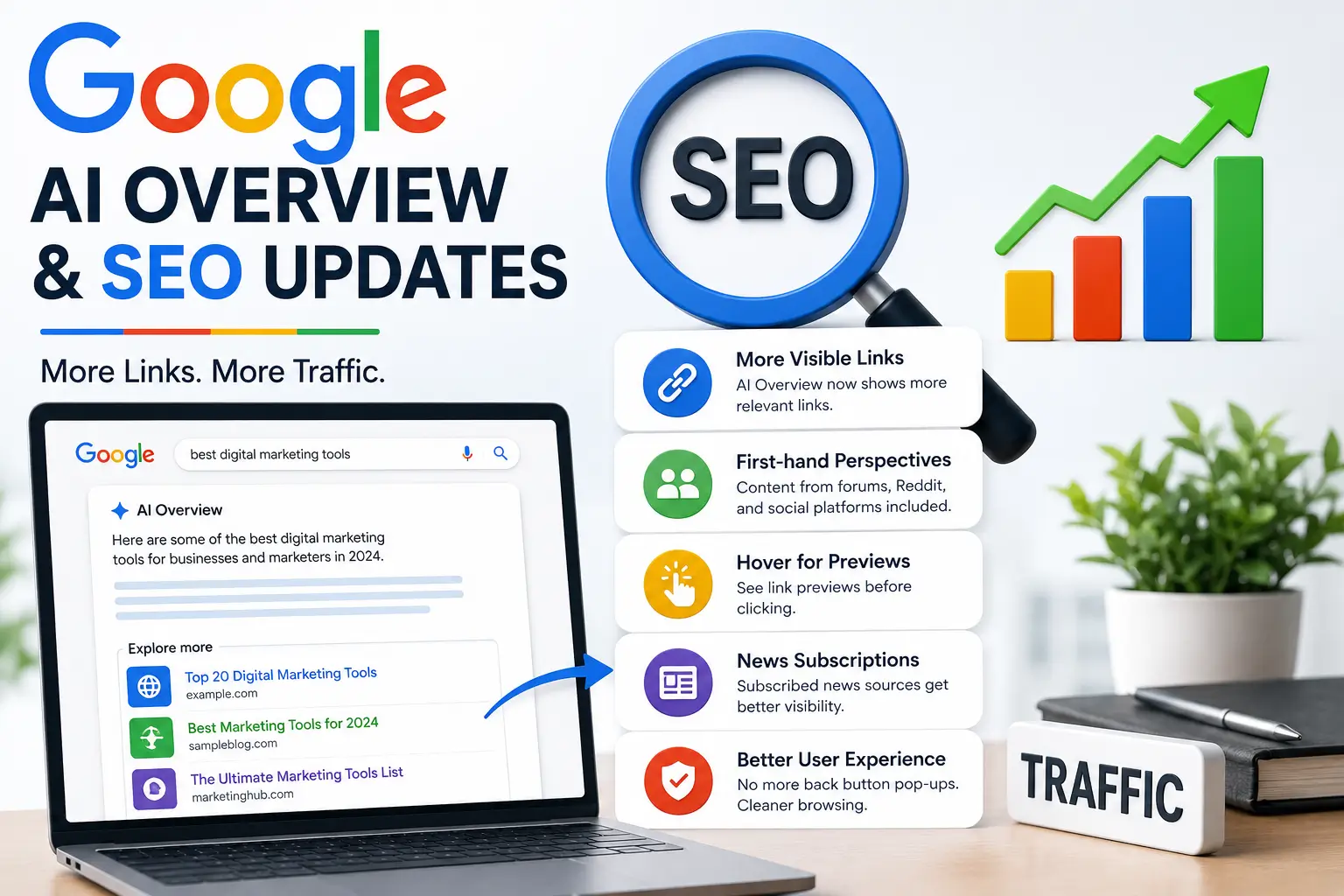
Google recently announced several important changes designed to support publishers and improve website visibility inside AI-powered search results.
According to Google, AI Mode and AI Overview will now display more external website links directly inside search responses.
The company believes this could:
- Increase website clicks
- Improve user engagement
- Help publishers regain traffic
- Encourage deeper content exploration
These updates are now being viewed as a major part of Google AI Traffic Recovery efforts.
What Is the “Further Exploration” Feature?
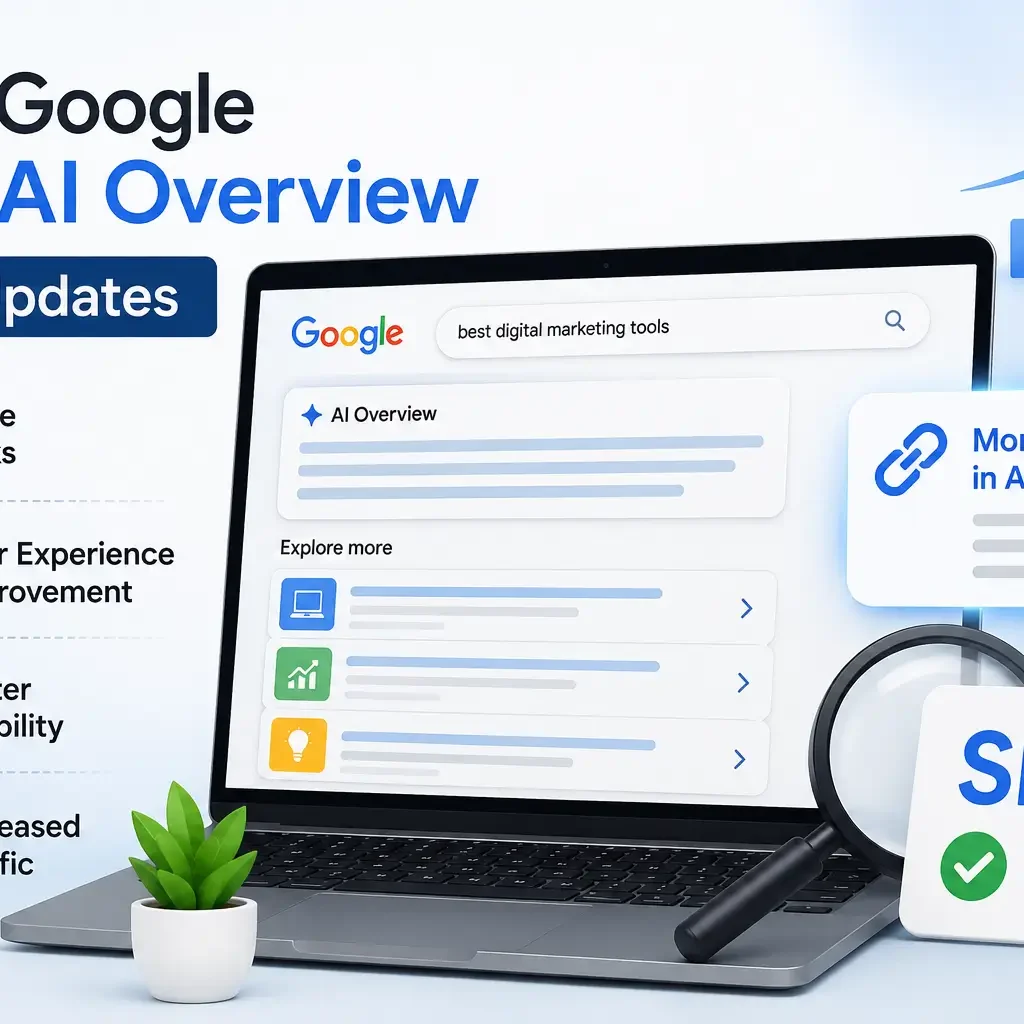
Google is introducing a new “Further Exploration” section inside AI Overview.
This feature will display additional related links connected to a user’s search topic.
For example:
- Technology searches may show related blogs
- Architecture topics may include case studies
- News searches may display related reports and articles
This change means websites may gain traffic not only from exact keywords but also from related search intent and topic relevance.
Related Queries Could Drive More Traffic
One of the most important parts of Google AI Traffic Recovery is the expansion of related-query visibility.
Previously, websites mostly ranked for exact keyword searches. Now, Google may also display content for semantically related queries.
This means websites with strong topical authority and in-depth content may receive broader visibility across multiple search variations.
SEO experts believe this shift will make topic-based content strategies more important than traditional keyword-focused SEO.
News Websites May Benefit the Most
Google AI Traffic Recovery updates also appear to favor subscription-based and trusted news publishers.
Users who subscribe to premium news platforms may now see those publications highlighted more prominently inside AI-generated search experiences.
This could help:
- Premium journalism websites
- Subscription-based publishers
- High-authority news brands
Google says the goal is to support reliable journalism and improve access to trusted information sources.
Reddit and Social Media Content Will Become More Important
Google AI Overview is no longer limited to traditional websites. Google has confirmed that AI-generated results may now include more content from social platforms and community discussions.
This includes:
- Reddit discussions
- Quora answers
- Social media conversations
- Online forums and communities
Google believes these platforms provide first-hand user experiences that can improve the quality of AI-generated responses.
As a result, social media activity may become a much stronger SEO signal in the future.
Hover Preview Feature Could Improve CTR
Google is also introducing a new Hover Preview feature for AI-generated search results.
When users hover over a website link, they may now see:
- Website logo
- Article headline
- Content preview
- Website information
SEO professionals believe this feature could increase click-through rates because users will better understand the value of the content before visiting the page.
Google Takes Action Against Back Button Hijacking
Alongside Google AI Traffic Recovery updates, Google has also announced stricter action against spammy user experience tactics.
Previously, some websites triggered popup advertisements when users pressed the browser back button. This created frustration and poor browsing experiences.
Google has now confirmed that:
- Back-button popups will be treated as spam
- AdSense support for this feature will end
- The update will become active in June 2026
Google says user experience will become increasingly important for future search rankings.
Google’s Position on AI-Generated Websites
Another major topic in the SEO industry is whether Google will penalize AI-generated websites.
Google recently clarified that AI-generated websites are not automatically penalized. However, low-quality AI-generated content without originality or value may struggle to rank well.
According to Google, successful websites still require:
- Helpful content
- Original insights
- Technical SEO
- Strong user experience
- Human value
This means Google AI Traffic Recovery will not depend on mass AI content generation alone.
Why Vibe Coding Cannot Replace SEO
Google representatives also discussed “Vibe Coding,” where AI tools automatically create websites based on simple prompts.
While AI can build websites quickly, Google explained that SEO still requires detailed technical management, including:
- Sitemap optimization
- Robots.txt configuration
- Canonical setup
- Crawling management
- Indexing improvements
In other words, AI website builders may simplify development, but proper SEO strategy still requires expertise and ongoing optimization.
What Is the Preferred Sources Feature?
Google is also expanding its Preferred Sources feature.
This feature allows users to select websites they trust and want to see more frequently in search experiences.
However, Google clarified that:
- Preferred Sources will not automatically improve rankings
- Low-quality websites will not receive boosts
- Content quality remains the top ranking factor
This confirms that strong, reliable content remains essential for Google AI Traffic Recovery.
What Small Bloggers Should Focus On
SEO experts believe smaller publishers now need to adapt their strategy quickly.
Simply publishing AI-generated content will no longer be enough.
Website owners should now focus on:
- Original research
- High-quality articles
- Social media visibility
- Strong SEO foundations
- Better user experience
Publishers who consistently provide real value are more likely to survive and grow in the AI-driven search ecosystem.
How SEO Could Change in the Future
Google AI Traffic Recovery may reshape the SEO industry completely over the next few years.
Future SEO strategies will likely focus more on:
- Topical authority
- Brand trust
- User experience
- Expert-level content
- Social engagement
Experts believe the websites that provide reliable, experience-driven, and in-depth information will perform best in AI-powered search environments.
Conclusion
Google AI Traffic Recovery has become one of the biggest discussions in the SEO industry after AI Overview significantly impacted website traffic. Although many publishers experienced traffic declines, Google is now introducing new features and visibility improvements designed to support websites and restore organic clicks. In the future, websites that focus on high-quality content, strong SEO practices, trusted branding, and better user experience are likely to succeed in the evolving AI-powered search landscape.
read also: Why Traditional SEO Is Dead, Win Google AI Search Authority Strategy